
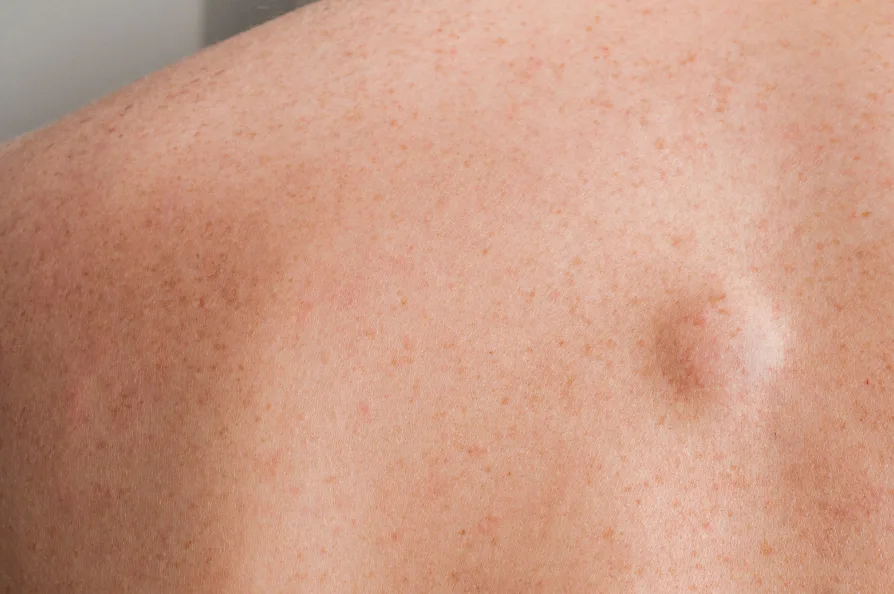
A lipoma is a soft, fatty lump that feels doughy and slides easily under the skin when you press it. A cyst is a firmer, rounder sac within the skin, often with a small dark dot in the centre, and it can become red and sore. A consultant can confirm which it is.
Lipomas and cysts are two of the most common lumps under the skin, and both are almost always harmless. If you are not sure whether a lump is a cyst or lipoma, the clues below will usually point one way, but only an examination can confirm it. This guide explains the differences, where each usually appears and when a lump should be checked.
What Is The Difference Between A Lipoma And A Cyst?
A lipoma is a slow-growing lump of fat cells that sits just under the skin. A cyst is a closed sac within the skin, filled with a soft, cheesy material called keratin. Most skin cysts are epidermoid cysts, which are often called sebaceous cysts.
- What it is. Lipoma: a growth of fat cells. Cyst: a sac filled with keratin.
- How it feels. Lipoma: soft, doughy or rubbery. Cyst: firm, smooth and round.
- How it moves. Lipoma: slides easily under the skin. Cyst: moves with the skin, because it sits within it.
- Surface. Lipoma: normal skin, with no opening. Cyst: often a small dark dot in the centre.
- Infection or inflammation. Lipoma: rare. Cyst: can become red, swollen and sore.
- Pain. Lipoma: usually painless. Cyst: usually painless unless inflamed.
How Can You Tell If A Lump Is A Lipoma Or A Cyst?
Press gently on the lump and notice how it feels and moves. A lipoma usually feels soft and doughy and slides under your fingers, because it sits beneath the skin rather than in it. A cyst usually feels firmer and rounder, and the skin moves with it, because the sac sits within the skin itself.
Look at the surface too. Many cysts have a small dark dot at the top, called a punctum, which is the blocked opening of the sac. Lipomas have no opening, so the skin over them looks normal.
How the lump behaves over time is another clue. A cyst can become inflamed, turning red, swollen and tender, and it may leak a thick, cheesy material. A lipoma rarely changes in this way. Do not squeeze a lump, and especially not a cyst, as squeezing a cyst at home can cause infection and scarring.
These clues are a guide, not a diagnosis. Some lumps share features of both, and a lump that looks like a lipoma or cyst can occasionally be something else, which is why a new lump should be examined.
Where Do Lipomas And Cysts Usually Appear?
Lipomas are most common on the shoulders, back, neck, arms, trunk and thighs, where there is a layer of fat under the skin. They usually appear in adults, grow slowly over months or years and rarely go away on their own.
Cysts can appear almost anywhere, but they are most common on the face, neck, scalp, chest and back. Cysts on the scalp are often pilar cysts, which form from hair follicles and tend to feel smooth and firm. Like other skin cysts, they often come back after draining.
Can A Lipoma Or A Cyst Be Cancerous?
Almost never. Lipomas and skin cysts are benign growths, which means they are not cancer. The concern is a lump that only looks like one: very rarely, a lump that seems to be a lipoma is a liposarcoma, a cancer of fatty tissue. A liposarcoma is usually deeper, larger and quicker growing, which is why a lump with those features should always be checked. When a lump is removed, it is examined in a laboratory, which confirms exactly what it is.
When Should You Get A Lump Checked?
Most lipomas and cysts are harmless, but any new lump is worth having looked at. See a doctor promptly if a lump:
- is growing quickly or keeps getting bigger
- is larger than 5cm
- feels hard and does not move when you press it
- is painful, red or hot
- comes back after it has been removed
A lump that bleeds, crusts or changes in appearance should also be checked. If the change is in a mole rather than a lump under the skin, our guide on when to get a mole checked covers the signs to look for.
How Does A Consultant Tell Them Apart?
At a consultation, your consultant asks how long you have had the lump and whether it has changed, then examines it. They check how it feels, how it moves, how deep it sits and whether there is a central opening. In most cases this is enough to tell a lipoma from a cyst.
The Pinewoods Clinic is a private, consultant-led clinic in Waterloo, Liverpool, where lumps are assessed by consultant dermatologists and surgeons. If you decide to have a lump removed, you can read about lipoma removal and cyst removal at the clinic, or arrange a consultation to have your lump examined.
Frequently Asked Questions
Can A Lipoma Turn Into A Cyst?
No. A lipoma is made of fat cells and a cyst is a sac filled with keratin, so one cannot become the other. It is possible to have a lipoma and a cyst at the same time, in different places.
Should A Lipoma Or Cyst Be Painful?
Usually not. A lipoma can ache if it presses on a nerve or contains more blood vessels than usual, and a cyst can become painful if it is inflamed or infected. A lump that becomes painful should be checked.
Can You Have More Than One Lipoma Or Cyst?
Yes. Some people develop several lipomas over time, and cysts can also appear in more than one place. Each new lump is worth having checked, as they are not always the same kind.